Recover Like the Pros
How the Best Athletes Return to Peak Performance
When elite athletes get injured, they rarely just rest and heal.
Their recovery is structured, progressive, and informed by research and years of experience.
These same principles can help anyone return to their sports and activities after injury.
The key is understanding the rehabilitation-to-performance continuum: a model that views recovery as an evolving process from early rehab through to sport performance.
The strategies below can help you rebuild faster and more effectively.
Think of Recovery as a Continuum, Not a Moment
Traditional rehab often ends when pain decreases or basic movement returns, yet research shows returning to pre-injury sport performance requires continuing beyond basic rehab – A 2016 consensus statement in the British Journal of Sports Medicine emphasized that recovery should progress through clearly defined stages: rehabilitation, return to participation, return to sport, and return to performance.
In this model, each phase builds upon the last, with testing for strength, power, control, and sport-specific readiness. This approach helps identify deficits early and ensures that injured tissues, movement patterns, and conditioning are ready for high demand.
The Power of Proper Diagnosis and Planning
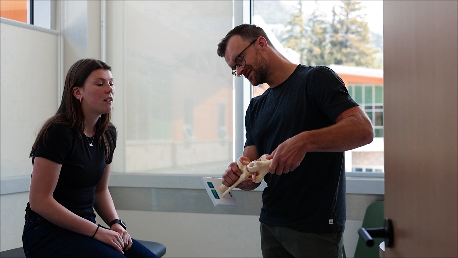 Recovery starts with accurate information.
A correct diagnosis guides every decision – what tissues are involved, how much loading they can tolerate, and rough guidance on when to progress.
Imaging, clinical testing, and movement assessments all play a role, but so does understanding the athlete. Two people with the same injury may need different plans depending on sport demands, health history, or conditioning level.
Our team uses criteria-based progression when possible to advance programming only when objective goals (like 90% limb strength symmetry or pain-free plyometric tolerance) are met. This evidence-guided process reduces reinjury risk and ensures a safe return to full sport demands.
Date Informs Progression
Assess and monitor data to inform when and how to progress workload.
Diagnostic Imaging – X-ray, Ultrasound, MRI to name a few. Are you healing?
Force plates, Force Gauge Testing, Other Repeatable Tests – Are you developing more strength, power and returning to symmetry?
Heart Rate Variability and Resting HR – Are you recovering from the injury and from workout training loads?
Sleep Quality Measurement– Are you getting enough restorative sleep?
Workload ratios – Are you progressing to rapidly? Too slowly?
Strength Training is Medicine
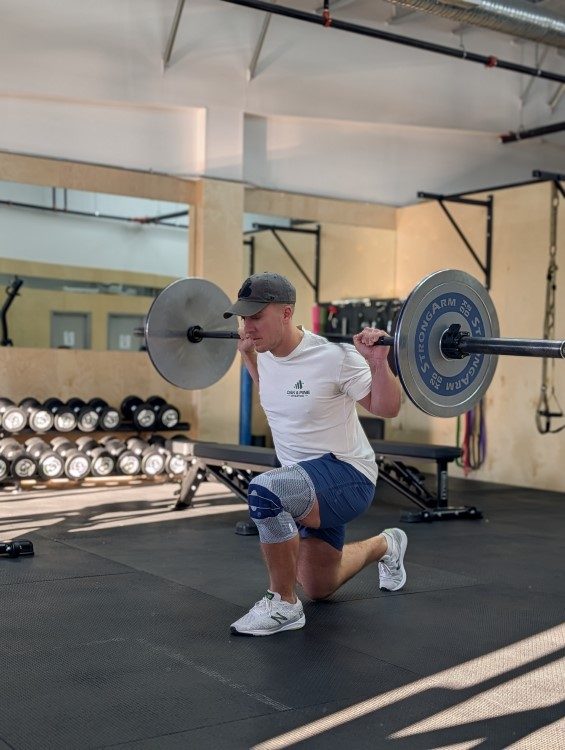
Stronger athletes recover faster and stay healthier.
Strength training builds muscle, improves coordination, balance, tendon health, neuromuscular control, and bone density… to name just a few positives.
A large meta-analysis study of 26,000 participants found that strength training reduces sport injuries by up to 50% and helps to reduce the risk of re-injury.
This strength work needs to be progressive. Early rehab may focus on isometrics and controlled range exercises, but later phases must increase load, speed, and complexity. These progressive challenges help you adapt.
These changes follow the SAID principle (Specific Adaptation to Imposed Demands). Simply put, your body adapts to the stresses you place on it. To perform at a high level again, your training must eventually look like your sport.
Communication and Collaboration are Non-Negotiable
The best athletes have entire teams working in sync. At Banff Sport Medicine we have built a solid team that we believe are essential to client success – surgeons, sport medicine physicians, physiotherapists, athletic therapists, massage therapists, strength coaches, psychologists, and dietitians.
If you don’t have access to that scale of support, you can build your own collaborative team.
Successful recovery depends on clear communication between the patient, their health care team and their coach. We recommend sharing test results, goals, and expectations.
When athletes use a collaborative approach, adherence to programming improves, and outcomes are significantly better.
Always Feel Challenged
Are you just going through the motions?
Elite recovery programs are built on progressive overload – this gradual increase in intensity, complexity, and variability keeps the athlete both physically and mentally engaged.

Maintain Fitness During Recovery
A common mistake is allowing cardio and conditioning to reduce during injury. Top athletes avoid this by training around the injury (e.g. cycling, pool running, or ski ergometers to maintain cardiovascular fitness).
Maintaining aerobic capacity improves recovery by promoting circulation, supporting mental health, keeping a level of fitness that is required to return to sport. Research shows that athletes who preserve conditioning during rehab regain their previous level of performance faster.
Recovery is a Skill
Recovery can be as much psychological as it is physical.
Confidence, motivation, and fear of reinjury can limit performance as much as physical strength and conditioning.
We see that the best athletes use mental skills training, visualization, and graded exposure to rebuild trust in their body.
The same approach that helps our local Olympians and professional athletes return to sport can work for anyone
— it requires structure, progression, and consistency.
By thinking of your journey as one that will lead you gradually towards performance, we believe that you will see greater success.

